/filters:quality(90)/fit-in/970x750/coros-web-faq/upload/images/727ec9ec3d848a15d9ff6f8ebe33aa0d.jpg)
The proverb “it’s always darkest before dawn” tends to surface in difficult moments, when progress feels distant and effort hasn’t yet returned what it demands. Few understand that more intimately than Almgren, because for much of his career, he has lived it. He's experienced countless setbacks, near-misses, and races where things almost fell into place. There have been seasons where improvement was visible but not yet decisive, and moments where belief was internalised because there was little external proof to support it.
Ahead of the 2026 track season, we caught up with Almgren to understand whether these years have defined him or refined him.
Time to Build
There have been many years in Andreas' career where momentum never lasted long enough to feel secure.
Interruptions came in different forms: injuries, untimely illnesses, broken training blocks, all forcing resets. It's a cycle familiar to many endurance athletes.
“The fear is long breaks of not being able to run,” he says. In those periods, progress was no longer measured in breakthroughs, but in healthy weeks finally stitched together.
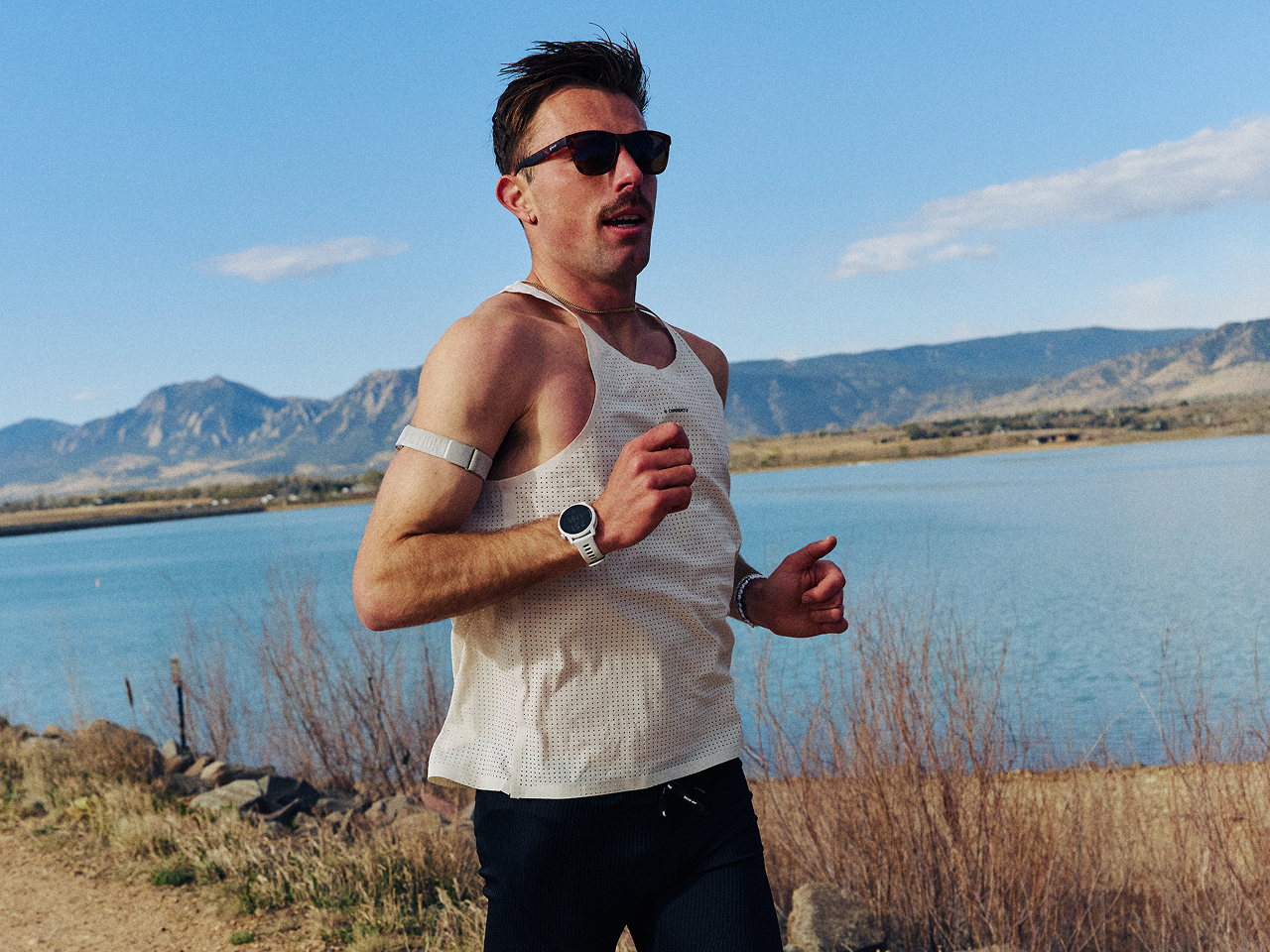
Amidst these setbacks, Almgren’s relationship with training began to change. Structure started to matter differently, and he found comfort in the numbers.“I really like the story that numbers tell,” he explains. “I studied a master's in Mathematics, specialising in optimisation system theory, so I use them quite a lot in my training, whether it’s heart rate, lactate or speed.”
Breaking Through
In 2025, the signs began to show. Performances stopped feeling isolated and started forming a pattern. The work done when no one was watching began to translate more directly into racing when the eyes of the world were fixed.
The same workouts were completed with lower heart rates, intensity trended upward, and the gap between preparation and outcome started to narrow.
The World Athletics Championship in Tokyo became the clearest reflection of that shift, a major championship medal.
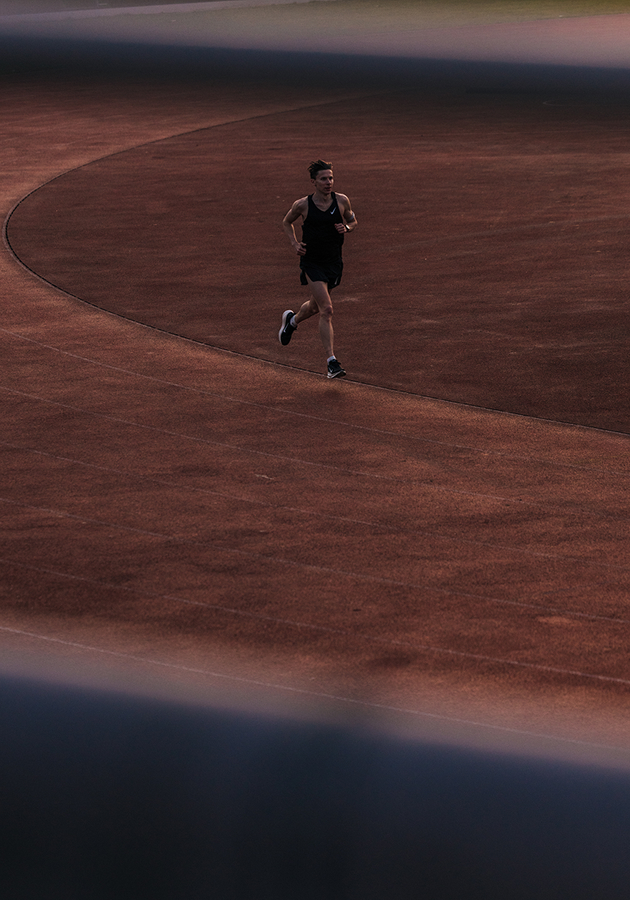
Even months later, the emotional release remains easy to recall.
“At the finish line in Tokyo, I had competitors come up to me and say, ‘You’ve been through so much, we’re proud of you, man, enjoy it.’ And the emotion just came out,” he says. “All of the dark times, all those years—they were just worth it.”
Tokyo confirmed that the training approach was finally speaking at the right volume, and taking that into 2026 was the chance to build something special.
Going for Gold
For Andreas, everything is building toward one moment in 2026. I have one specific race in mind, and that’s the 10,000m in Birmingham,” Almgren says, referring to the European Championships. "I’m going to try and do everything I can to get the gold medal… and I hope to run fast on the way there."
There is no uncertainty in this goal, and with minimal room for error, the COROS ecosystem has become key to maintaining focus and direction.
2026 Track Season
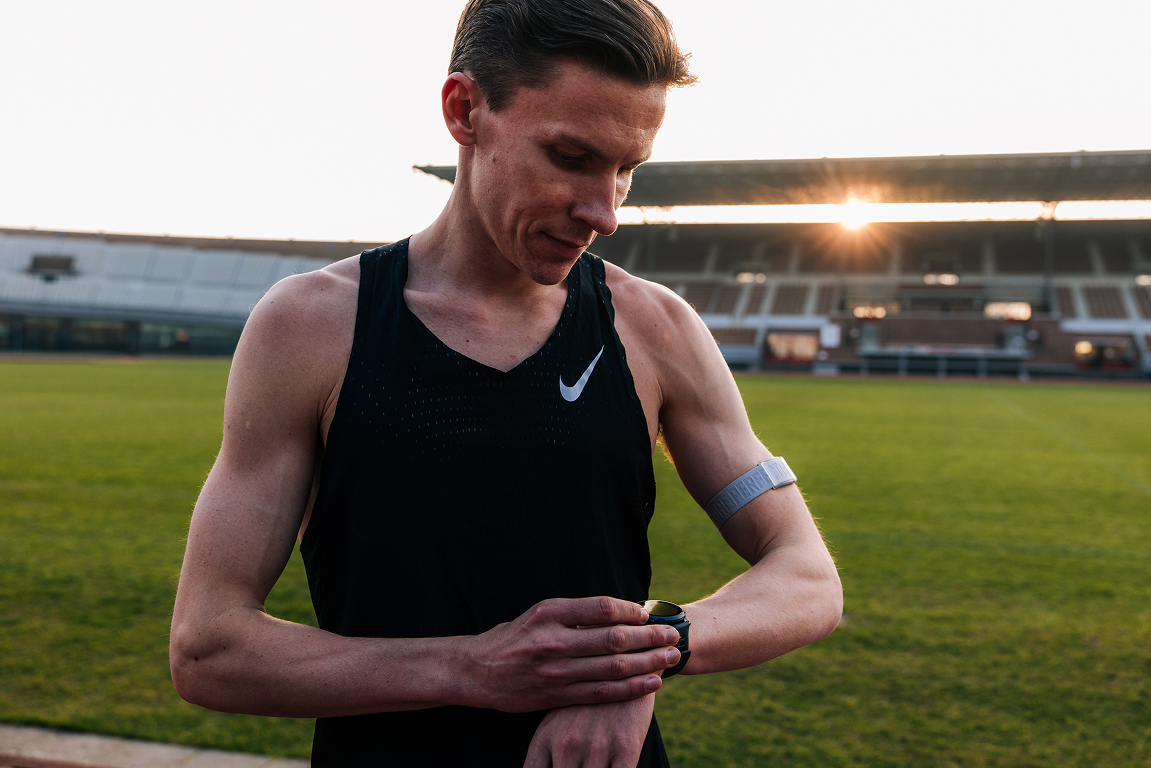
"I am ahead of where I was last year, and I had a pretty good year last year," he says with quiet confidence.
Although he isn't a different athlete, this confidence and the success of Tokyo have built trust in the process. The result is visible in how the training has come together this year. Anaerobic speed work has been integrated earlier in the training cycle, and the consistency of threshold has built his base fitness from 115 to 149 since his record-setting start to the year in Valencia.
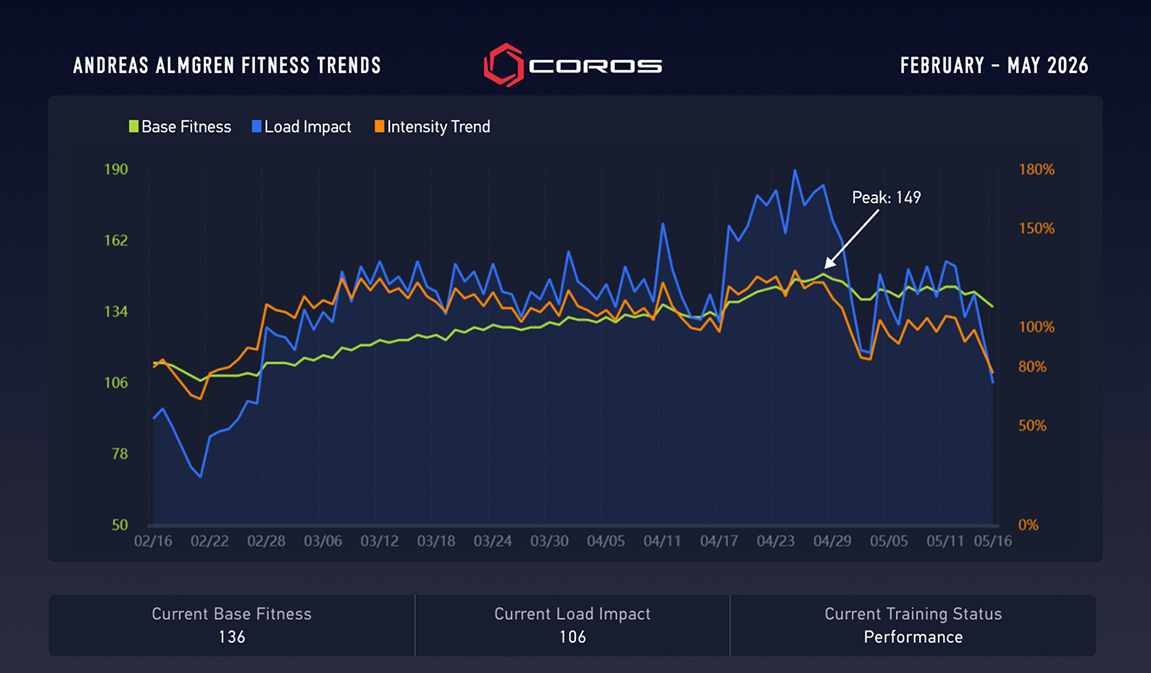
"I like the base training where you just stack the days", and this shows in Andreas' consistent management of weekly training loads, regularly averaging around 1000TL with little deviation week on week.
This isn't void of quality, though. Fast 200m efforts in 25 seconds at the end of hard workouts, during 170km+ weeks, show that the complete package is coming together nicely.
He understands more clearly than ever how difficult it is to arrive at your peak moment healthy and consistent. "You have to understand your body's feelings, but I don’t think I would be where I am now without data".
It's an important lesson for every athlete: data sharpens intuition. Once that clicks into place, the momentum starts to build.