/filters:quality(90)/fit-in/970x750/coros-web-faq/upload/images/c51be8364cef264c442f7eba8d5e542f.jpg)
The COROS DURA is a serious training tool on its own. It delivers navigation, elevation, power, and cadence, with battery life so long that you stop thinking about charging. If you're using it to structure your training, you already have a strong foundation.
What a lot of DURA owners don't realize yet is that the DURA is also the entry point into a much bigger system. Pair it with a COROS Heart Rate Monitor and a COROS watch, and the ride data you're already collecting becomes the foundation for a bigger picture of performance, recovery, and long-term fitness.
Two More Pieces, Two More Jobs
That bigger system is built on two more devices and the software that ties everything together. A COROS Heart Rate Monitor and a COROS watch each cover ground beyond the DURA, and the COROS Training Hub is where all three come together into one picture.
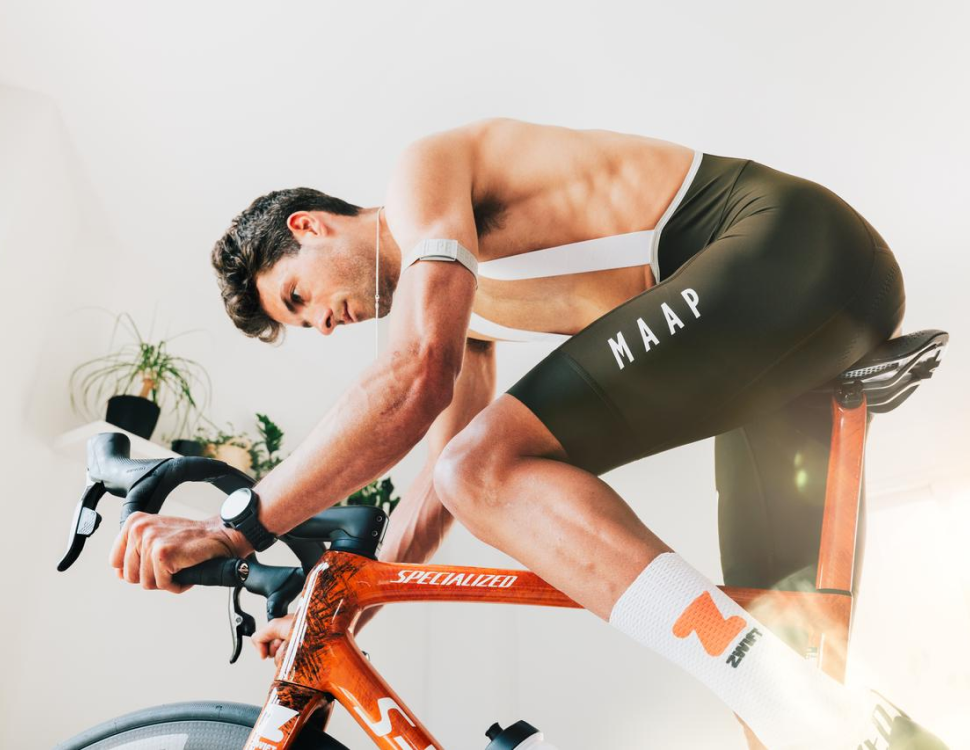
- The COROS Heart Rate Monitor pairs directly with DURA and measures how your body is responding to each ride. Power tells you how much work you did. Heart rate tells you what that work cost you. Two rides can hit the same watts and look identical at first glance, but very different heart rates behind those numbers point to fatigue, heat stress, or dehydration before any of that shows up in your legs.
- A COROS watch measures everything that happens between rides. It measures sleep duration and quality, overnight HRV, resting heart rate, and daily stress, all of which shift depending on how well your body is recovering from training. Since fitness gains happen during recovery rather than during the ride itself, that data is what tells you whether you've actually absorbed a hard session or if you're still carrying fatigue into the next one.
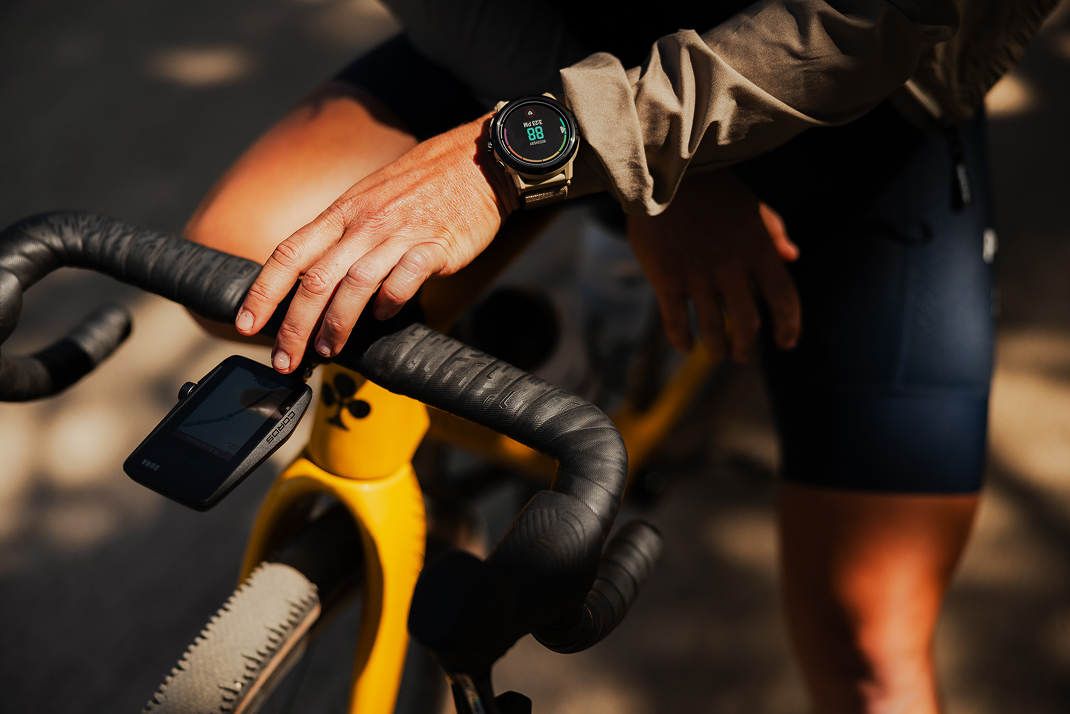
The COROS App pulls all three data sources into one place, so instead of checking a bike computer, a heart rate readout, and a watch separately, you get a single view. The built-in training software will provide a number of advanced metrics like Training Load, showing what each ride cost you and how much you've recovered from it. For more precise analysis with a mouse & keyboard, you can use the COROS Training Hub on a computer.
A Day in the COROS Ecosystem
The setup is straightforward, and it fits around rides you're already doing:
- To start, pair the Heart Rate Monitor with your DURA. After the initial pairing process, the two will automatically connect via bluetooth before each ride. You'll get your usual power, speed, and cadence data, plus a heart rate layer that shows how hard your body is working to produce it. If heart rate is running high for a power number that normally feels moderate, you can use that signal to adjust your workout in real time.
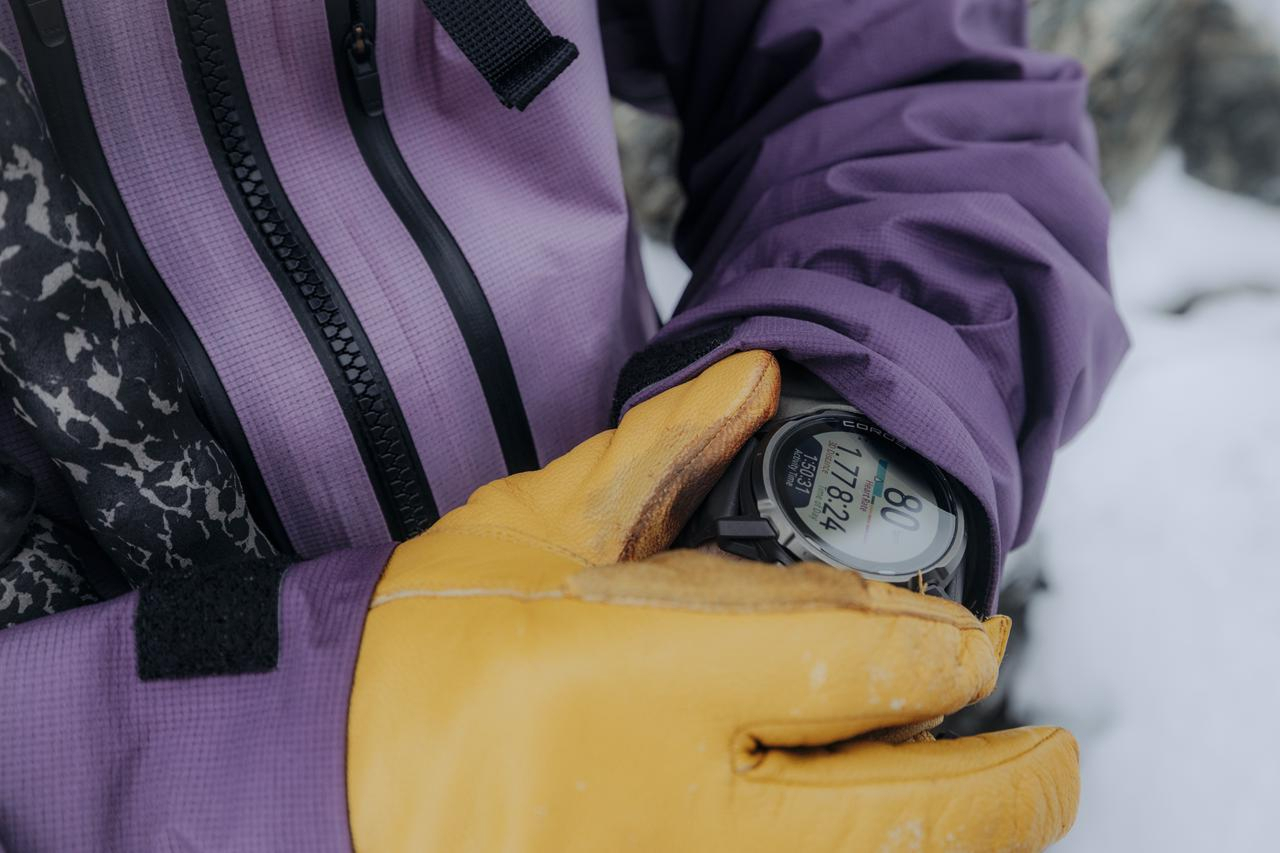
- Wear the watch the rest of the day, even at night. This is what fills in the picture off the bike. Sleep duration and quality, overnight HRV, and daily stress all show up here.
- Check your recovery before deciding how hard to go on your next ride. A recovery status or HRV reading below your normal baseline is a cue to swap today's hard interval session for an easier ride and move the key workout to tomorrow. A normal or elevated reading gives you a little extra confidence to push.
Our COROS Coaches guide to heart rate training covers zone setup in more depth, and the recovery metrics guide walks through how to interpret each of your recovery-related metrics.
A Quick Look at Metrics
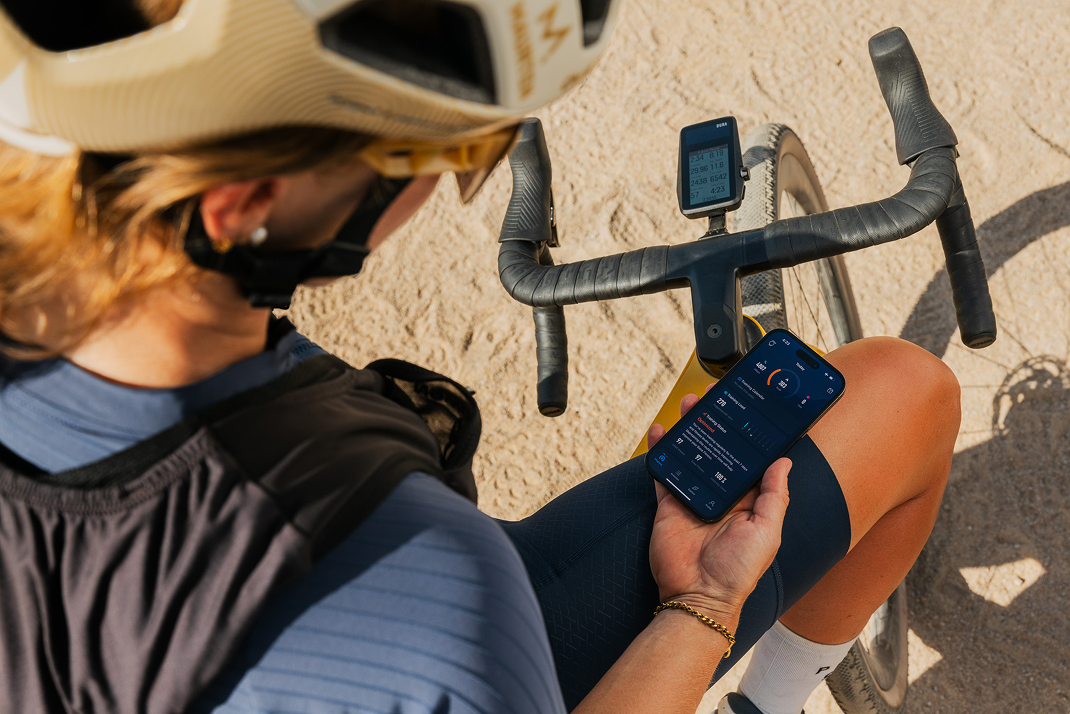
As we've already hinted, the COROS app is a goldmine of training analysis. Some riders check one or two metrics before a ride and leave it there. Others dig into the full history with their coach. Regardless of where you land, here are a few metrics worth knowing first:
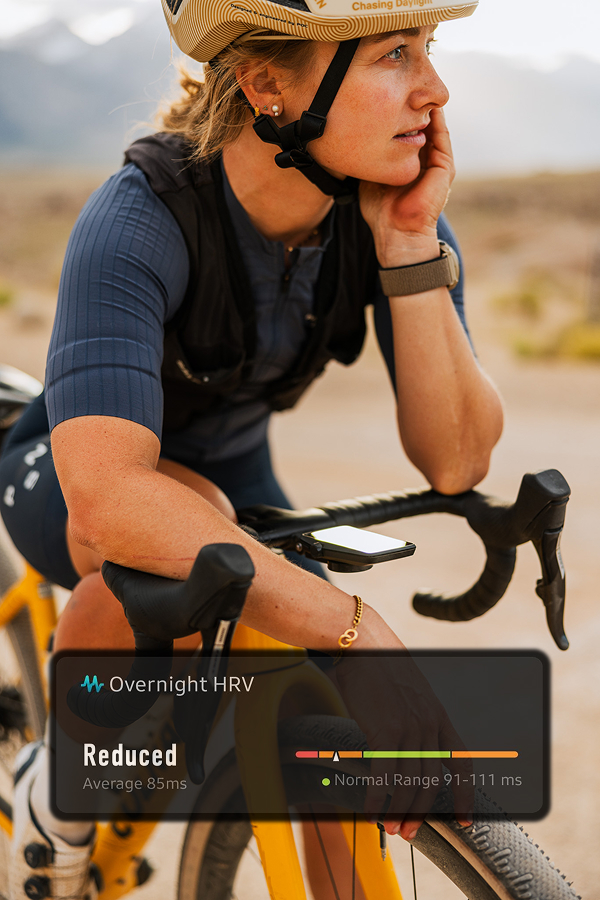
- HRV shows your nervous system's fatigue, which is an excellent indicator of how fresh you are for training. HRV is best interpreted relative to your own baseline, not as an absolute number. COROS shows your normal range for exactly this reason.
- Training Load quantifies the volume and intensity of any activity into a single number using heart rate and power. The same scale applies across every activity mode, so a hard swim on Monday correctly counts as fatigue when you're deciding how hard to ride on Tuesday.
- Training Status looks at your recent Training Load against your fitness level to tell you whether you're building fitness, maintaining it, or overreaching. It's the metric to check when you aren't sure whether to train harder or pull back.
Feel, Backed by Data
How a ride feels still matters. Riders build real instincts over time, and that sense of "today's legs are good" or "today's a grind" is worth listening to. The problem is that feeling only shows up once you're already in it. By the time a ride feels bad, you've usually been carrying some fatigue for a day or two already. Metrics from COROS can flag these signals before they show up in your legs, allowing you to feel at your best more often.
Building the Full Picture
The DURA already gives you everything you need to train on the bike. Add a Heart Rate Monitor and you start answering some new questions:
- What was the toll this ride put on your body?
- Is my training load trending in the right direction?
- Should I back off the effort if the ride feels hard?
Add a watch and you start seeing answers about recovery too:
- How is cycling affecting my sleep, stress, and overall health?
- Am I recovered enough for today's session?
- Am I getting fitter, or just tired?
Each device sheds light on a different part of the life of an athlete. Together, they form a complete ecosystem for your training. Start with the piece that answers the question you're asking most right now, and add from there.